“It’s really hard to have a healthy relationship with my phone.” - A 19 year old college student during our weekly executive function coaching session.
Smart phones were designed to make life easier, but having unlimited access to information and entertainment within an arms reach, around the clock, is actually causing more challenges for many people, especially college students.
They're chronically distracted and exhausted by their phones, and it is significantly impacting their mental health, academic performance, and overall wellbeing.
When your ADHD student is overwhelmed or anxious, they autopilot to their phone to cope. They stay up late doomscrolling because they are overwhelmed with college, but then they are too tired to do anything the next day so they continue doomscrolling (which is part of the reason why it is so hard to stop doomscrolling.)
As an executive function coach, I share strategies with all of my college students to help with their ADHD phone addiction. Here are some you can use to help your own student.
I use affiliate links for my favorite products that I use and trust. If you click and purchase, I may receive a small commission at no extra cost to you.
ADHD, Phone Addiction, and How to Help Your Student Stop Doomscrolling
Your college student doesn’t want to keep scrolling. They want to put the phone down and go to bed at a decent time. They want to have a healthier relationship with their phone, but they don’t know how.
ADHD brains crave dopamine. Scrolling provides ADHD brains with anticipatory dopamine. The act of scrolling and anticipating what will come next boosts dopamine in the brain. The biggest reward comes from that anticipation, so they keep scrolling. Yes, the content of the video provides some dopamine, too, but the anticipatory dopamine is what keeps them hooked.
When college students understand what is going on in their brain, it can be extremely validating and empowering.
Here are the three steps I recommend to help your college student stop doomscrolling.
Step 1: Your college student needs to notice their self-talk around their phone use.
When I talk with college students about doomscrolling I often hear the same responses:
“I should just be able to stop”
“I should be able to scroll for a few minutes”
“I shouldn’t be doing this right now…there are so many other things I should be doing.”
“Shoulds” are not supportive and will not help you stop doomscrolling. “Shoulds” create shame and guilt.
I also hear students say:
“I need down time before bed.”
“Scrolling is meant to help me relax.”
“It’s dopamine.”
College students tell themselves that social media and scrolling will help them feel better, help them relax, and help them focus better later.
Scrolling is an escape and a distraction from things in life that are causing discomfort, anxiety, or stress. But when your student finally breaks away from their phone, their assignments, homework, and life demands are all still there.
Scrolling doesn’t actually help your college student relax, or boost their mood, or help them take action. Scrolling often makes college students feel worse.
As a parent, there is only so much you can do to help them navigate their relationship with their phone. Your student needs to be actively engaged in this process. Helping your student recognize or notice what their brain is telling them about phone use is an important first step.
When I work with college students as an executive function coach, we create a self-talk strategy that involves:
Noticing & naming what their brain is telling them
Gently challenging the thought
Replacing it with something more supportive
For example:
Instead of “I should just be able to stop scrolling,” try “It’s really hard to stop scrolling. It’s going to be uncomfortable to put my phone down, and that’s okay.”
Instead of “Scrolling is meant to help me relax” try, “I’m autopiloting to my phone because I’m tired. What else would help me relax?
Step 2: Building a toolbox of strategies that match the reason your college student is stuck doomscrolling
If your student wants to stop doomscrolling, they need strategies and tools that work for their brain.
Parents can support their college students with phone addiction by helping them understand why they are picking up their phone. When your student understands why they are defaulting to their phone, they can choose an alternative activity that meets that need. Working with an executive function coach can be a great additional resource to relieve the pressure and responsibility you feel as a parent to support them.
For Example:
Bored → hang out with friends in a common area, go for a walk, read a book for fun, play a game or puzzle (not on your phone), do a craft
Lonely → text or call a friend or attend a club or campus activity
Can’t sleep → try a body scan meditation or yoga nidra instead of scrolling
Overwhelmed or anxious → do a breathing exercise, go for a short walk, or use other coping strategies
Having alternative activities is extremely important because your brain is wired to autopilot to your phone. It will take time and practice choosing something else at that moment, especially if your student with ADHD is overwhelmed or anxious.
Building a toolbox of strategies takes time and practice. I love supporting college students with ADHD to notice these patterns, learn about their brain, and create systems and tools that fit them.
Step 3: Create External Accountability and Support.
So many college students feel like they “should” be able to just stop or that they “should” have the willpower to do this on their own. Phones were designed to reel you in and keep you there.
There are many different apps and tools to intentionally block social media use, one of the main causes of doomscrolling and phone addiction. Creating an external boundary can be an extremely helpful reminder.
Examples of External Systems:
My personal favorite is Brick. It’s a physical device that you tap your phone against and it “bricks” your phone to block distracting apps. If you want to “un-brick” your phone you need to re-tap it. It helps you be more intentional with phone use. Brick is a great gift for college students with ADHD!
Create a “landline” in your bedroom where your phone charges away from your bed. Taking physical space from your phone is extremely helpful, so you don’t pick it up out of habit when you’re trying to go to bed.
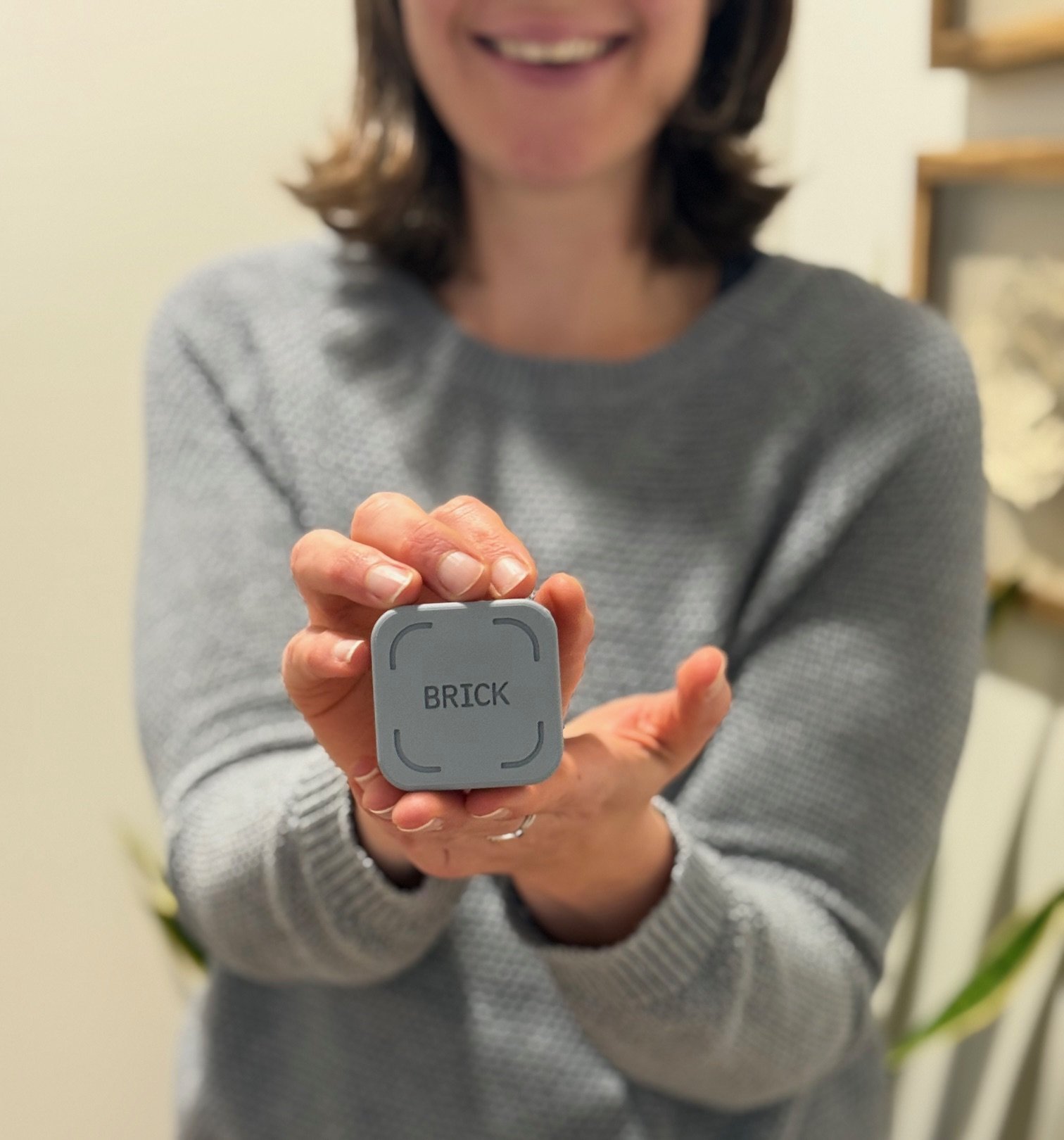
Brick is a physical tool to help you stop doomscrolling.
In addition to app blockers, creating community support and accountability can be extremely helpful for your college student.
A few examples:
When you’re working on a group project or studying, have everyone put their phone on “do not disturb” and pile the phones out of sight.
When you’re watching TV or a movie, ask everyone to put their phone in another room.
My partner and I ask each other, “Are you enjoying your scroll” as a gentle, supportive way to check-in.
How to Get Support for ADHD and Phone Addiction
Doomscrolling and excessive cell phone use is the most common challenge I see college students navigating. It impacts all areas of their life: mental health, sleep, and focus. This isn’t “just scrolling for fun.” College students are using their phones as coping mechanisms for stress, anxiety, and overwhelm and unfortunately, it is exacerbating the problem.
Having a healthier relationship with your phone takes time, practice, and trying new systems, but it is possible.